What a Tucson Event Planner's Portfolio Website Needs
Your portfolio website is the first event you plan for every potential client. 94% of first impressions are design-related, and a sloppy website tells people your events will be sloppy too. Get the layout right and you'll book more holiday parties this December.
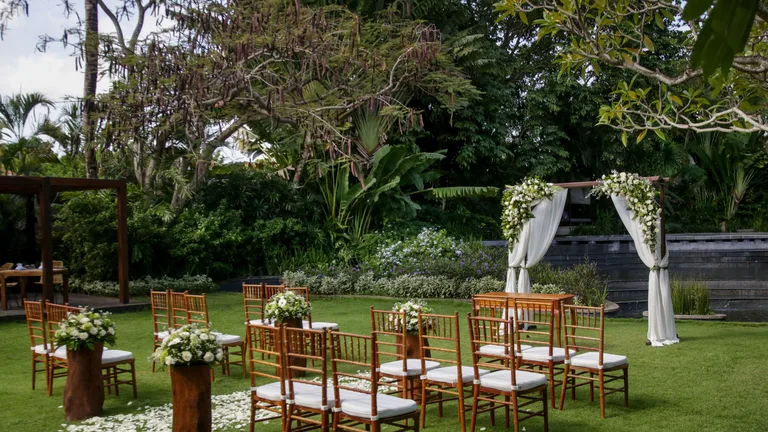
Event Portfolio Design
Visitors decide in 0.05 seconds whether to stay on your site. A portfolio that loads fast and shows real work wins the booking.
74% judge business credibility by website design
Your website is your first impression. Make it count.
Galleries sorted by event type, prices with a "from" in front of them, and a quote form on every page. Your website is the first event you plan for every client, and they read it as a sample of your work whether you intended that or not. Somebody with a five thousand dollar budget for a company party opens three planners on a lunch break. Stock photographs of champagne flutes tell her you have nothing of your own to show, which may be untrue and is what she concludes.
Stanford's web credibility research puts 74% of visitors as judging a business on its site design. That statistic is uncomfortable in most trades and fair in this one, because organizing things visibly well is literally the service being bought. A cluttered site is a reasonable proxy for a cluttered gala.
Why Your Portfolio Website Matters
94%
First impressions are design-related
74%
Judge credibility by website design
88%
Won't return after bad experience
67%
Of couples research vendors online
What Kind of Gallery Layout Works Best for Event Planners?
Sort by event type and give each its own page. Weddings, corporate, holiday parties, quinceañeras, private celebrations, eight to twelve photos each with a description and the venue named. Somebody planning an office party will not scroll two hundred images hoping to find one, and a wedding gallery does not reassure them, it worries them.
Compress everything. Under 300 KB an image, so a gallery page is up inside three seconds on a phone. Google's benchmarks put 53% of mobile visitors as leaving anything slower. Five megabyte files straight out of the photographer's Dropbox drive away precisely the people the photographs were meant to impress, which is a painful way to lose work you already did well.
Strongest image first in each category, because the opening photo sets what the reader expects from every one after it. The gala at Starr Pass leads the corporate section. The Foothills quinceañera leads private events. Tucson photographs well and most planners underuse that.
- Organize by event type Weddings, corporate, holiday parties, quinceañeras, and private events each get their own section
- Show 8 to 12 photos per event Enough to tell the story without overwhelming the visitor
- Include venue and event details Where it happened, how many guests, and what you coordinated
- Compress every image Photos should be under 300 KB each so the page loads in under 3 seconds on mobile
- Add alt text to every photo Describe what's in the image for accessibility and SEO
- Feature your best work first The first photo in each gallery sets the expectation
- Refresh quarterly Have your web team swap out older events and add recent work to show you're active and current
How Should Event Planners Display Testimonials on Their Website?
Testimonials on the home page and on their own page. Each with a first name, the event, the venue and something specific you did. "She planned our 150-person holiday party at the Convention Center and handled everything from catering to the AV" does work that "amazing planner, highly recommend" cannot, because the second one could describe anybody.
HubSpot's 2025 research puts 88% of consumers as trusting testimonials about as much as a personal recommendation, provided they carry specific detail. Put each quote beside a photograph from that same event. The pairing is what makes it land, because the reader can see the thing being described.
Eight to twelve, spread across event types rather than clustered in whatever you do most. If the reviews are all weddings, go and ask two corporate clients, because an HR manager reading twelve glowing wedding testimonials concludes you are a wedding planner. Weight the testimonials toward the work you want more of.
88%
Trust testimonials like personal referrals
72%
Take action after reading positive reviews
8-12
Ideal number of testimonials to display
Six Pages Every Event Planner's Website Needs
Skip any of these and you're leaving money on the table. Each page serves a specific purpose in turning a visitor into a booked client.
Homepage with Hero Gallery
Your 3 to 4 best event photos front and center. Not a stock photo of champagne glasses. Real events you planned in Tucson.
Portfolio by Event Type
Separate galleries for weddings, corporate events, holiday parties, and private celebrations. Let visitors find their event type fast.
Services and Packages
List what you offer with starting price ranges. Full-service planning, day-of coordination, and corporate event management as separate packages.
Testimonials Page
Client reviews with event type, venue name, and specific praise. 'She saved our Tucson Botanical Garden wedding' beats 'great planner.'
About Your Story
How you got into event planning, how many events you've done, and what makes you different. People hire people, not logos.
Contact with Quote Form
Quote request form with event date, type, guest count, and budget range. A tappable phone number. Your response time promise.
How Can Tucson Event Planners Get More Leads from Their Website?
Put the quote form on every page. Somebody reaching the bottom of the holiday party gallery has just been persuaded, and that is the worst possible moment to send them off to find a contact page. Ask for the date, the type, a rough head count and a budget range, which is enough for your first reply to be a real answer rather than four questions.
Make the number dial when tapped. Google's benchmarks put 60% of mobile searches for local services as ending in a call. An office manager searching on a lunch break wants to speak to somebody in the next ten minutes, and a number set as an image, or living only in the footer, quietly converts that call into nothing.
Show what is left. If three Saturdays in December are gone, say so. This is not a pressure tactic in your trade, it is a fact with a deadline attached, and "two December weekend dates remaining" is simply true in a way that most urgency copy is not. We build the call path around exactly that.
Should an Event Planner's Website Show Pricing?
Yes, ranges. Not exact quotes, which are impossible before you know the room and the head count, but a starting figure. "Corporate coordination from $2,500" and "wedding packages from $3,500" lets somebody establish in four seconds whether this conversation is worth either of your time. IBISWorld puts U.S. event planning at $6.4 billion a year, and enough of that market publishes to make silence conspicuous.
Hiding it costs twice, which is the part planners underestimate. You spend discovery calls on people who were never going to afford you, and you lose serious clients who read the silence as too expensive and remove you before you knew you were in. WeddingWire found 67% of couples research vendors before making contact, so most of that filtering happens without you.
Three or four tiers. Day-of coordination from $1,200, partial planning from $2,500, full service from $4,000, each listing what it includes. The tiers do something a single number cannot, which is let somebody place themselves rather than be judged. A structure like that removes the guessing on both sides.
Websites That Book Events
- • Real photos from events you actually planned
- • Galleries organized by event type
- • Client testimonials with specific details
- • Pricing ranges for each service package
- • Quote request form on every page
Websites That Get Skipped
- • Stock photos of generic party setups
- • One massive gallery with no organization
- • No testimonials or just star ratings
- • No pricing info anywhere on the site
- • Contact form buried on a single page
Why Does Holiday Party Season Matter for Your Website?
The season runs mid-November to New Year's Eve, and the booking happens weeks before that. Corporate year-end parties, posadas, family gatherings at places like the Arizona Inn, downtown New Year's events. Whoever has a finished website in October takes the early bookings, and October is not when this feels urgent, which is exactly why it works.
December here gives you something planners elsewhere cannot offer, which is weather. Sixties and low seventies means patio receptions, garden parties at Tohono Chul and rooftop dinners are all genuinely possible in the middle of winter. Lead with outdoor Tucson work. A gallery of indoor ballrooms says nothing to somebody imagining dinner under the stars at the Desert Museum.
The Knot's 2025 research puts 67% of couples as researching vendors before making contact, and corporate organizers behave the same way. Three results get opened, and the one that loads, shows real work and makes contact easy gets the enquiry. It is a low bar and it is a bar most planners in this town have not cleared.
What Pages Does an Event Planning Website Need?
Six pages. A home page with your three or four strongest photographs and a plain statement of what you do. Services with the tiers and starting prices. The portfolio, sorted. Testimonials with real detail. An about page. A contact page with a form that asks the right four questions.
Every page needs a way to reach you. A tappable number in the header, a quote button in the navigation, a short form in the footer. Most visitors never open a contact page at all. The moment somebody is impressed is the moment the next step has to already be in front of them.
Name the venues, too. A planner who lists Hacienda del Sol, Tanque Verde Ranch, the Arizona Inn and the Westward Look is answering the question a couple actually has, which is whether you have worked their room before. It also lands you in searches nobody else is entering, which is most of what a Tucson planner website that names the venues is for.
One caution on the gallery, since it is the whole product here. Six hundred photographs at full resolution will take eight seconds to load on a phone in a parking lot, and that visitor is gone. Sized properly, the same gallery loads in under two. Our site examples are built that way if you want to see the difference on your own phone.
Your Portfolio Should Work as Hard as You Do.
Let It Book the Next Event.
Internet Crafters helps Tucson event planners turn their best work into a website that brings in new clients year-round.
Flat pricing. No subscriptions. No contracts. Galleries, testimonials, and quote forms built to convert visitors into bookings.
Steve Bullis
Steve Bullis is the founder of Internet Crafters, a Tucson web studio building flat-rate websites for local businesses. He's been helping Arizona small business owners get online since 2005.
Sources
- Stanford Web Credibility Research - How People Evaluate Web Sites credibility.stanford.edu
- WeddingWire - Newlywed Report 2025 weddingwire.com
- HubSpot - Website Design Statistics 2025 blog.hubspot.com
- Google - Mobile Page Speed Benchmarks thinkwithgoogle.com
- IBISWorld - Event Planners in the US 2025 ibisworld.com
- The Knot - Wedding Planning Statistics 2025 theknot.com
External links open in a new tab. Internet Crafters has no affiliation with these publications.